
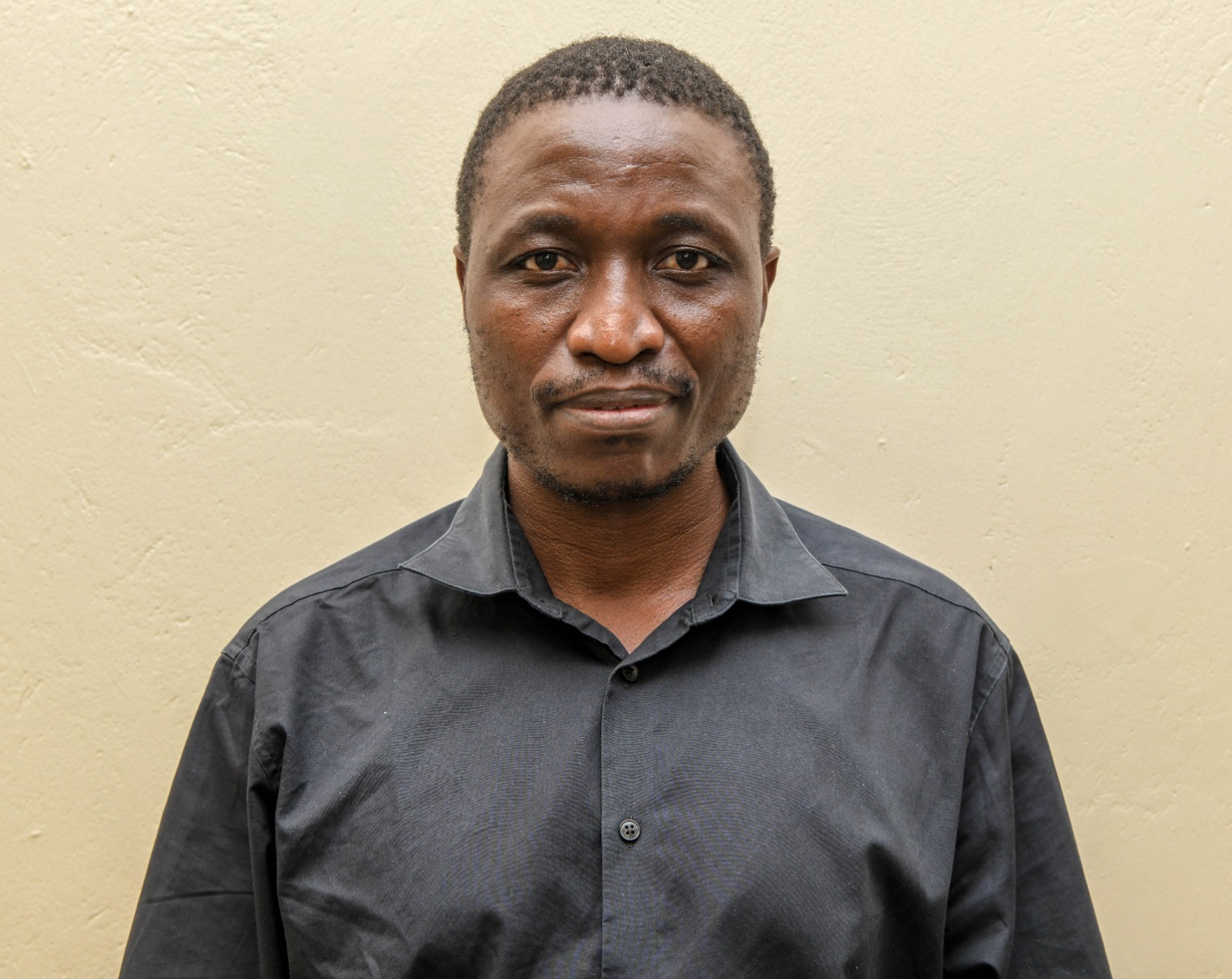
Senior Research Scientist Oceanography & Hydrography Social Anthropology & Marine Governance Small-Scale Fisheries • Marine Conservation • Coastal Livelihoods Location Mombasa Centre Department Oceanography and Hydrography Research Interests Small-scale fisheries governance and coastal livelihoods; Marine conservation and protected area management; Social anthropology of coastal and marine socio-ecological systems; Local ecological knowledge and indigenous resource governance; Gender, social inclusion, and community resilience; Environmental governance, sustainability, and participatory research | Research Focus: Examining the complex relationships between coastal communities and the marine ecosystems they depend on, bridging scientific evidence, policy, and community knowledge to strengthen marine conservation, fisheries governance, and sustainable coastal resource management. Dr. Victor Mwakha Alati is a Senior Research Scientist at the Kenya Marine and Fisheries Research Institute (KMFRI), with over 17 years of experience in Social Science research across the East African coastal region. He holds a PhD in Social Anthropology from the University of Roehampton (United Kingdom), an MSc in Ecological Marine Management from Vrije Universiteit Brussel (Belgium), and a BSc in Applied Aquatic Sciences from Egerton University (Kenya). Dr. Alati's research examines the complex relationships between coastal communities and the marine ecosystems they depend on. He specialises in small-scale fisheries governance, local ecological knowledge, gender and social inclusion, indigenous marine management systems, climate resilience, and participatory governance. He has extensive expertise in mixed-methods research, combining ethnography, household surveys, participatory approaches, and stakeholder engagement to generate evidence that informs policy and practice. He has led and contributed to internationally funded research projects supported by organisations including the Swedish Research Council (VR FORMAS), Save Our Seas Foundation, Global Affairs Canada, WIOMSA, and Plan International. His research has been published in journals such as the Journal of the Royal Anthropological Institute, Marine Policy, and Ocean & Coastal Management. Dr. Alati's work bridges scientific evidence, policy, and community knowledge to strengthen marine conservation, fisheries governance, and sustainable coastal resource management. He collaborates with universities, government agencies, and international organisations, including Uppsala University, WWF Kenya, Wildlife Research Training Institute, Kenya Wildlife Service and CORDIO East Africa. His recent work includes participating in the development of the Coral Reef and Seagrass Ecosystems Action Plan for Kenya, and leading Social Assessments for Protected and Conserved Areas (SAPA) of Mombasa and Kisite MPAs, and developing the regional Locally Managed Marine Areas (LMMA) Toolkit for the Western Indian Ocean. Through his research and advisory work, he promotes conservation approaches that are scientifically robust, socially equitable, and responsive to the needs of coastal communities. Research & Administrative Responsibility
Research Interest / Areas of Expertise
Academic Qualifications
Professional Membership
Professional Services
Selected Publications Alati, V.M. (2026). Forced gifts and moral claims: entitlement, fear, and the moral economy of fish in coastal Kenya. Journal of the Royal Anthropological Institute. https://doi.org/10.1111/1467-9655.70020 Otwoma, L. M., Obuya, J., Mulanda, C. A., Alati, V. M., Munuphe, I., Olunga, J., ... & Chimimba, C. (2025). Local knowledge corroborates threats of local extinctions in Kenya's exploited reef fishes. Marine Policy, 177, 106650. Alati, V. M., Osuka, K., Otwoma, L. M., Tuda, P., & Nordlund, L. M. (2023). Gender analysis in fisheries: The case of the shelled mollusc fisheries in Kenya. Marine Policy, 158, 105863. Wanyonyi, I. N., Wamukota, A., Alati, V. M., & Osuka, K. (2021). The influence of 'space' on migrant fisher livelihoods. African Identities, 19:3, 359-374. https://doi.org/10.1080/14725843.2021.1937050 Alati, V. M., Olunga, J., Olendo, M., Daudi, L. N., Osuka, K., ... & Nordlund, L. M. (2020). Mollusc shell fisheries in coastal Kenya: Local ecological knowledge reveals overfishing. Ocean & Coastal Management, 195, 105285. Buckley, S.M., McClanahan, T.R., Quintana Morales, E.M., Alati, V. M., Nyanapah, J., Otwoma, L.M., Pandolfi, J.M. (2019). Identifying species threatened with local extinction in tropical reef fisheries using historical reconstruction of species occurrence. PLoS ONE 14(2): e0211224. https://doi.org/10.1371/journal.pone.0211224 Omukoto, J.O., Owiti, H., Alati, V. M., Munga, C.N., Wamukota, A.W. (2018). Participatory assessment of priority fishery profiles in an overfished urban inshore seascape in Kenya. WIO Journal of Marine Science 17(2): 79-92. Wanyonyi, I. N., Wamukota, A., Tuda, P., Alati, V. M., Nguti, L. M. (2016). Migrant fishers of Pemba: Drivers, impacts and mediating factors. Marine Policy, 71, 242-255. Links |