Research Scientist Oceanography & Hydrography Marine Pollution & Coastal Water Quality Marine Litter • Microplastics • Circular Economy • Pollution Monitoring Email: cmwalugha@kmfri.go.ke Location KMFRI Mombasa Centre Years of Experience 2016–2024: Research Intern, KMFRI OH Department
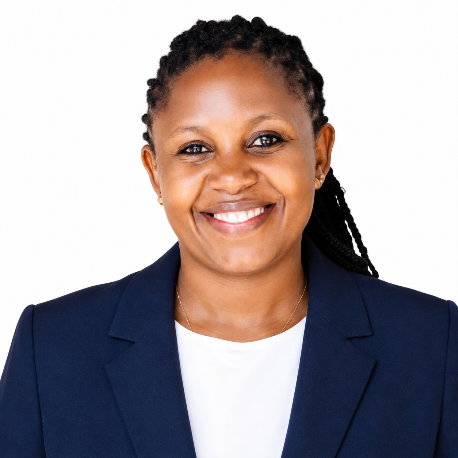
2024–Present: Research Scientist Department Oceanography and Hydrography Department Research Interests Pollution monitoring and management; Circular economy approaches for plastic waste management | Research Focus: Investigating marine pollution, particularly marine litter and microplastics, and assessing coastal water quality to generate scientific evidence that supports the sustainable management of Kenya's coastal and marine resources. Catherine is a Research Scientist at the Kenya Marine and Fisheries Research Institute (KMFRI), where she conducts research to support the Institute's mandate to generate scientific information for the sustainable development, management, conservation, and utilisation of Kenya's marine resources. She holds a Bachelor of Science in Botany and Zoology from the University of Nairobi and has more than ten years' experience in marine research. Her research focuses on marine pollution, particularly marine litter, microplastics, and coastal water quality assessment. She has been actively involved in national and regional programmes that monitor the status and trends of marine pollution, assess the impacts of land-based and sea-based pollution sources, and generate evidence to support the sustainable management of Kenya's coastal and marine environment. Her work contributes to the reporting of Sustainable Development Goal (SDG) 14 indicators. Through scientific publications, technical reports, and stakeholder engagement, Catherine is committed to generating high-quality scientific evidence to inform policy, strengthen environmental management, and promote the conservation and sustainable use of Kenya's coastal and marine ecosystems. Research & Administrative Responsibility - ▹ Conduct research on marine pollution, marine litter, and microplastics in Kenya's coastal and marine environment
- ▹ Assess coastal water quality and monitor pollution trends
- ▹ Participate in national and regional pollution monitoring programmes
- ▹ Contribute to scientific publications, technical reports, and stakeholder engagement
- ▹ Generate evidence to support SDG 14 reporting and environmental policy
Research Interest / Areas of Expertise - ▹ Pollution monitoring and management
- ▹ Circular economy approaches for plastic waste management
Academic Qualifications - ▹ Bachelor of Science (BSc) in Botany and Zoology – University of Nairobi, Kenya
Professional Membership - ▹ Member – Western Indian Ocean Early Career Scientists (WIO-ECSN)
- ▹ Member – Organization for Women in Science for the Developing World (OWSD)
Selected Publications Okuku, E., Kombo, M. M., Mwalugha, C. S., Chiphatsi, M. M., Otieno, K., Chepkemboi, P., ... & Otieno, C. O. (2024). Anthropogenic litter pollution in selected African transboundary and Great Rift Valley lakes. Journal of Great Lakes Research, 50(5), Article 102382. https://doi.org/10.1016/j.jglr.2024.102382Okuku, E. O., Kombo, M., Mwalugha, C., Owato, G., Otieno, K., Mbuche, M., ... & Wanjeri, V. (2023). Are tropical mangroves a sink for litter leaking from land- and sea-based sources? Evidence from selected Kenyan mangroves. Marine Pollution Bulletin, 187, 114590. https://doi.org/10.1016/j.marpolbul.2022.114590Okuku, E. O., Owato, G., Kiteresi, L. I., Otieno, K., Kombo, M., Wanjeri, V., ... & Mwalugha, C. (2022). Are tropical estuaries a source of or a sink for marine litter? Evidence from Sabaki Estuary, Kenya. Marine Pollution Bulletin, 176, 113397. https://doi.org/10.1016/j.marpolbul.2022.113397Okuku, E. O., Kiteresi, L. I., Owato, G., Mwalugha, C., Omire, J., Mbuche, M., Chepkemboi, P., Ndwiga, J., Nelson, A., Kenneth, O., & Lilian, M. (2020). Baseline meso-litter pollution in selected coastal beaches of Kenya: Where do we concentrate our intervention efforts? Marine Pollution Bulletin, 158, 111420. https://doi.org/10.1016/j.marpolbul.2020.111420Okuku, E. O., Kiteresi, L. I., Owato, G., Mwalugha, C., Omire, J., Otieno, K., ... & Mulupi, L. (2020). Marine macro-litter composition and distribution along the Kenyan Coast: The first-ever documented study. Marine Pollution Bulletin, 159, 111497. https://doi.org/10.1016/j.marpolbul.2020.111497Okuku, E., Kiteresi, L., Owato, G., Otieno, K., Mwalugha, C., Mbuche, M., ... & Omire, J. (2021). The impacts of COVID-19 pandemic on marine litter pollution along the Kenyan Coast: a synthesis after 100 days following the first reported case in Kenya. Marine Pollution Bulletin, 162, 111840. https://doi.org/10.1016/j.marpolbul.2020.111840 Links |