
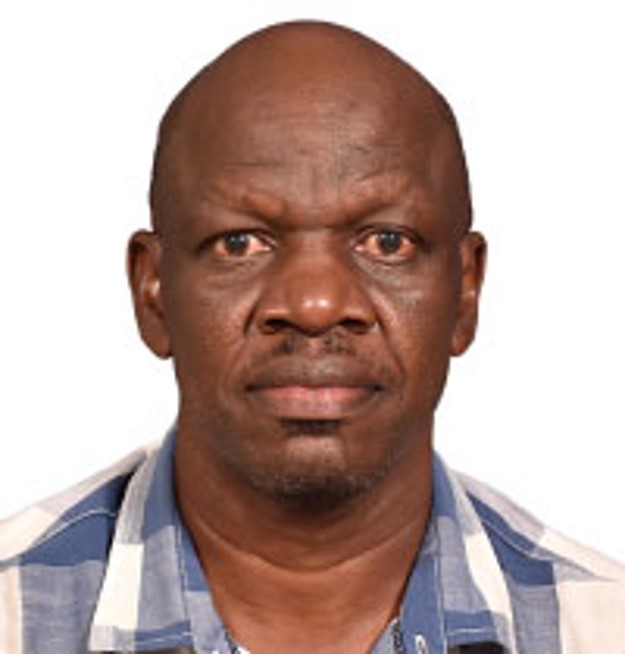
Senior Research Scientist Kisumu Centre Marine Geochemistry & Aquatic Health Aquatic Health Assessment • Lake Sedimentation • Paleo-limnology • Climate Change Location Kisumu Centre Years of Experience 1996-Present (30 years at KMFRI) Research Interests Aquatic Health Assessment; Lake Sedimentation; Paleo-limnology; Climate Change | Research Focus: Understanding both neo- and paleo-limnological shifts, sources/causes, and associated ecological impacts, with a view to providing management solutions that may lead to aquatic health restorations and consequential disaster preparedness. Fredrick Jared Guya is a Senior Research Scientist at the Kenya Marine and Fisheries Research Institute (KMFRI), holding an M.Sc. in Marine Geochemistry from the University of Victoria, Canada. He has practised under this profession for over 30 years while working with KMFRI, a body mandated to undertake researches on the health and ecology of aquatic ecosystems. Global aquatic ecology have historically been transformed from desirable to less desirable through both natural and anthropogenic forcing. The ensuing transformations have directly or indirectly triggered mass biotic migrations, loss in biodiversity and abundance with occasional extinctions, changes in pelagic food web dynamics and nutrient cycling. The historical relationships between environmental and observed biotic changes have been difficult to establish due to paucity of data. His studies are therefore interested in understanding both neo- and paleo-limnological shifts, sources/causes, and associated ecological impacts, with a view to providing management solutions that may lead to aquatic health restorations and consequential disaster preparedness. Remarkable findings and management actions have emanated from the novel studies undertaken so far:
Research & Administrative Responsibility
Research Interest / Areas of Expertise
Academic Qualifications
Professional Membership
Professional Services
Selected Publications Mwamburi, J., Miruka, J. B., Guya, F. J., Wawiye, P., Morara, G. B., Ongore, C., Nyaundi, J., M., K., Aura, C. M., Nyamweya, C. S., & Muli, J. R. (2025). The Spatio-Temporal Changes in Water Quality and Influences on the Phytoplankton, Zooplankton and Fish Species in Four Large Riverine Ecosystems in Lake Victoria Basin, Kenya. Asian Journal of Environment & Ecology, 2025, 24:14-45. (hal-05286570) Aura, C. M., Mwarabu, R. L., Nyamweya, C. S., Ongore, C. O., Musa, S., Keyombe, J. L., Guya, F., Auwor, J. F., Owili, M., & Njiru, J. M. (2024). Unbundling sustainable community-based cage aquaculture in an afrotropical lake for blue growth. Journal of Great Lakes Research. https://doi.org/10.1016/j.jglr.2024.102410 Guya, F. J. (2024). Biotic and abiotic factors driving water hyacinth, Pontederia crassipes, phenology in Nyanza gulf, lake Victoria, Kenya. Journal of Great Lakes Research. https://doi.org/10.1016/j.jglr.2024.102355 Aura, C. M., Mwarabu, R. L., Nyamweya, C., Owiti, H., Ongore, C. O., Guya, F., Musa, S., Owili, M. A., Macharia, S., Abila, R. & Marriott, A. L. (2021). Exploring the potential of small water bodies as an integrative management tool for fisheries production. Fisheries Management and Ecology. https://doi:10.1111/fme.12529 Aura, C. M., Nyamweya, C., Njiru, J. M., Omondi, R., Manyala, J., Musa, S., Owiti, H., Guya, F., Ongore, C. O., Ogari, Z. & Mwamburi, J. (2021). Using the Multi-metric Index of Biotic Integrity methodological approach to determine the major river catchment that most pollutes a lake. Aquatic Ecosystem Health and Management. 24:12-20. https://doi:10.14321/aem.024.01.04 Guya, F. J. (2020). Biogeochemical characterization, phosphorus sources and intrinsic drivers to its speciation within the Nyanza Gulf of Lake Victoria. Lakes & Reservoirs: Science, Policy and Management for Sustainable. https://doi.org/10.1111/lre.12305 Guya, F. J. (2019). Intrinsic and extrinsic sources of phosphorus loading into the Nyando river, Kenya. Lakes & Reservoirs: Science, Policy and Management for Sustainable. Mwamburi, J., Yongo, E., Aura, M.C., Babu, M. J., Basweti, M. G., Gichuru, N. N., Guya, F., Nyaboke, H., Nyamweya, C., Nyaundi, K. J., Odoli, C. O., Ogwai, A. C., Okechi, J., Ombwa, V., Omwega, R., Ongore, C., Owili, M., Owiti, H. & Wawiye, I. P. (2018). Balancing Community needs and Resource Protection: The Case of Lake Kanyaboli, Kenya. Journal of Biodiversity & Endangered Species. https://doi:10.4172/2332-2543.1000215 Guya, F. J. (2013). Bioavailability of particle-associated nutrients as affected by internal regeneration processes in the Nyanza Gulf region of Lake Victoria. Lakes and Reservoirs: Research and Management, 18:129-143. Links |