
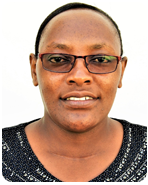
Research Scientist KMFRI – Mariculture Department Integrated Multitrophic Aquaculture Fish Nutrition • Selective Breeding • Seed Production • Ornamental Fish Culture Email: emogondu@kmfri.co.ke Email: nimmss2003@yahoo.com Current Role & Experience Research Scientist – KMFRI Mombasa Research Centre Marine Aquaculture Research Division Over 8 years of research experience Academic Qualifications PhD (Fisheries and Aquaculture) – Pwani University (ongoing, 2019 to date) MSc in Aquaculture and Marine Resources Management – Wageningen University, The Netherlands (2010–2012) BSc in Fisheries and Aquatic Sciences – Moi University, Kenya (2004–2008) Professional Memberships Western Indian Ocean Marine Sciences Association (WIOMSA) Sustainable Aquaculture Research Networks in Sub-Saharan Africa (SARNISSA) Wageningen University Alumni • EAFPES • AfriMAQUA | Leadership Focus: Advancing sustainable marine aquaculture through integrated multitrophic systems, innovative fish nutrition research, selective breeding, and technology transfer to coastal communities for food security and livelihood improvement. Dr. Esther Wairimu Magondu is a Research Scientist at the Kenya Marine and Fisheries Research Institute (KMFRI) working under the marine aquaculture research division with over 8 years of experience. Her research interests cover culture systems with specific interests in Integrated Multitrophic Aquaculture (IMTA), fish nutrition, selective breeding, broodstock management, seed production, ornamental fish culture, and population genetic studies on fish. Dr. Magondu is actively involved in on-farm training of fish farmers and coastal community groups for technology transfer, bridging the gap between research and practical application to enhance aquaculture productivity and sustainability at the grassroots level. She has been involved in collaborative projects in the region and has served as a project investigator for three donor-funded projects: one from the Western Indian Ocean Marine Science Association (WIOMSA) investigating fish nutrition for marine cultured fish, and two from the National Research Fund (NRF) – one on seaweed farming methods and an innovation grant on seaweed value addition. Research Interests & Specializations Integrated Multitrophic Aquaculture (IMTA) Fish Nutrition Selective Breeding Broodstock Management Seed Production Ornamental Fish Culture Population Genetic Studies Seaweed Farming & Value Addition Current Projects (Co-Investigator)
Previously Completed Projects (Principal Investigator)
Key Research Contributions & Publications
Book Chapter Contributions Fish Disease Management and Biosecurity Systems (Chapter 7) – Contributing author in State of Aquaculture Report in Kenya 2021: Towards Nutrition Sensitive Fish Food Systems (KMFRI, 2021, 190pp). Training & Extension – Actively involved in on-farm training of fish farmers and coastal community groups for technology transfer, building local capacity for sustainable mariculture. Dr. Esther Wairimu Magondu's research at KMFRI brings exceptional expertise in integrated multitrophic aquaculture, fish nutrition, selective breeding, and seaweed value addition – strengthening the Institute's capacity to develop sustainable and productive culture systems, pioneer IMTA technologies that enhance environmental sustainability, improve fish nutrition and feed efficiency, advance selective breeding for better strains, support ornamental fish culture and genetic studies, and empower coastal communities through technology transfer and on-farm training for food security and improved livelihoods. |