Research Scientist Mariculture – Seaweed & Seagrass Ecology Seaweed Mariculture & Seagrass Ecological Monitoring Seaweed Production Systems • Value Addition • Habitat Mapping • SCUBA Diving Email: akimathi@kmfri.go.ke Years of Experience Over 20 years in marine research Specialization Seaweed mariculture production systems, value addition, and seagrass ecological monitoring/mapping Memberships Member – KMFRI Scientific Monitoring & Evaluation Committee
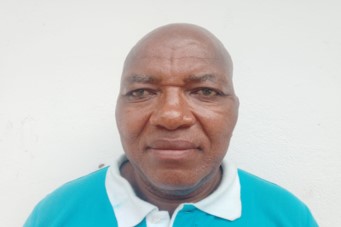
Member – KMFRI Data Protection Committee | Research Focus: Advancing seaweed mariculture production systems, developing innovative cultivation technologies, and conducting seagrass ecological monitoring to support sustainable coastal livelihoods and marine ecosystem conservation. Mr. Alex Kimathi Gabriel is a seasoned Research Scientist at the Kenya Marine & Fisheries Research Institute (KMFRI), stationed at Shimoni under the Mariculture Department, Aquaculture Division. With over 20 years of experience in marine research, he has been at the forefront of developing and upscaling seaweed cultivation as an alternative livelihood for coastal communities. Academic Background
Mr. Kimathi holds an MSc in Botany (Plant Ecology) from Jomo Kenyatta University of Agriculture and Technology (2019), a BSc (Hons) in Fisheries & Aquatic Sciences from the University of Eldoret (2013), and a Diploma in Applied Biology from the Technical University of Mombasa (2000). His academic training has provided a strong foundation in marine plant ecology, fisheries science, and applied biological research. Key Contributions
Mr. Kimathi has made significant contributions to the commercial seaweed farming industry in Kenya, particularly through the upscaling of seaweed farming projects on Kenya's southern coast (2009–2015). He has been instrumental in site suitability mapping for seaweed expansion, development of innovative cultivation technologies, and seagrass habitat mapping and ecological monitoring as a trained SCUBA diver. He has collaborated extensively with government agencies, NGOs, private organizations, and local communities to promote sustainable mariculture practices. Professional Roles
He is an active member of KMFRI's Scientific Monitoring & Evaluation Committee and the Data Protection Committee, contributing to the Institute's research quality assurance and data governance frameworks. His leadership in mariculture research has been recognized through various awards and certificates, including the Senior Management Course at the Kenya School of Government (2025) and recognition for outstanding research performance (2018/2019). Research & Administrative Responsibility - ▹ Coordination and supervision of seaweed mariculture research interventions
- ▹ Site suitability mapping for seaweed expansion along the Kenyan coast
- ▹ Development and testing of innovative seaweed cultivation technologies
- ▹ Seagrass habitat mapping and ecological monitoring (SCUBA diver)
- ▹ Collaboration with government agencies, NGOs, private organizations, and coastal communities
- ▹ Member – KMFRI Scientific Monitoring & Evaluation and Data Protection Committees
Academic Qualifications - ▹ MSc in Botany (Plant Ecology) – Jomo Kenyatta University of Agriculture and Technology (2019)
- ▹ BSc (Hons) in Fisheries & Aquatic Sciences – University of Eldoret (2013)
- ▹ Diploma in Applied Biology – Technical University of Mombasa (2000)
Selected Technical Reports - ▹ Breeding trials for prawn species at KMFRI Shimoni Hatchery (2025)
- ▹ Establishing deep-water seaweed nursery in coastal county (2026)
- ▹ Nutritional characterization of Kenyan-produced Artemia (2026)
- ▹ Seaweed farming policy brief (2018) and Mud crab farming policy brief (2018)
- ▹ Seaweed suitability mapping in Kenya's north coast (2021)
- ▹ Multiple reports on mariculture innovations, feed trials, and IMTA systems (2018–2026)
Certificates & Awards - ▹ Certificate of Proficiency in Senior Management Course – Kenya School of Government (2025)
- ▹ Certificate in Project Planning & Management – Kenya School of Government (2024)
- ▹ Supervisory Skills Development – Kenya Institute of Management (2023)
- ▹ Participation in Aquatic Resource & Blue Economy Conference (2022)
- ▹ Participation in Tropical Phyconomy Coalition Development (2021)
- ▹ Recognition for outstanding research performance (2018/2019)
- ▹ Recognition for lasting contribution to ASK Mombasa Show (2019)
- ▹ Leadership certificates as School Board and Class Representative (2009/2010)
Media & Newspaper Articles Selected Publications Kimathi, A. G., Mwaluma, J., Mirera, D., Kairo, J., Wakibia, J. (2024). Seaweed Production in Kenya amid Environmental, Market, and COVID-19 Pandemic Challenges. DOI:10.1007/978-3-031-47806-2 Kimathi, A.G., Wakibia, J.G., Gichua, M.K., Mirera, D. (2023). The potential of three culture techniques to mitigate environmental challenges and enhance yields of Eucheumoids... Kenya Aquatica Journal 8 (1). Uku, J., Daudi, L., Muthama, C., Alati, V., Kimathi, A., Ndirangu, S. (2021). Seagrass restoration trials in tropical seagrass meadows of Kenya. WIO Journal of Marine Science 20 (2). Mirera, D.O., Kimathi, A., Ngarari, M.M., et al. (2020). Societal and environmental impacts of seaweed farming in relation to rural development: Kibuyuni village case. Ocean and Coastal Management 194. Kimathi, A.G., Wakibia, J.G., Gichua, M.K. (2018). Growth rates of Eucheuma denticulatum and Kappaphycus alvarezii cultured using modified techniques. WIO Journal of Marine Science 17 (2). Eklöf, J.S., Fröcklin, S., Lindvall, A., Stadlinger, N., Kimathi, A., Uku, J., McClanahan, T.R. (2009). How effective are MPAs? Predation control and spill-in effects in seagrass-coral reef lagoons. Marine Ecology Progress Series 384. Kimathi, A.G., Kaunda-Arara, B. (2013). Diet and food preference of sea urchin Tripneustus gratilla in cultivated vs. non-cultivated seagrass beds. Undergraduate thesis. Kimathi, A.G. (2020). Growth rates and net yields of Eucheuma denticulatum and Kappaphycus alvarezii cultured under three techniques. MSc Thesis, JKUAT. Links |